
Akinola Davies Jr on his award-winning debut journey

Posted: 5 May 2026

Filmmaker, writer, visual artist, and current BAFTA Breakthrough, Akinola Davies Jr is the definition of multitalented. Now thanks to his debut film My Father’s Shadow he can also add BAFTA Award winner to this ever-growing list of achievements. Impressive for someone who admits: “I never thought I was going to make a feature film if I’m honest. I didn’t really think I’d get that opportunity.”

Davies Jr, along with his brother Wale Davies, won the Outstanding Debut for a British Writer, Director or Producer at the 2026 EE BAFTA Film Awards. Capturing audiences’ attention with their semi-autobiographical story of two boys and their father set over the course of one day during the 90s Lagos elections it was a film that was both “cathartic” for the duo and resonated widely with filmgoers.

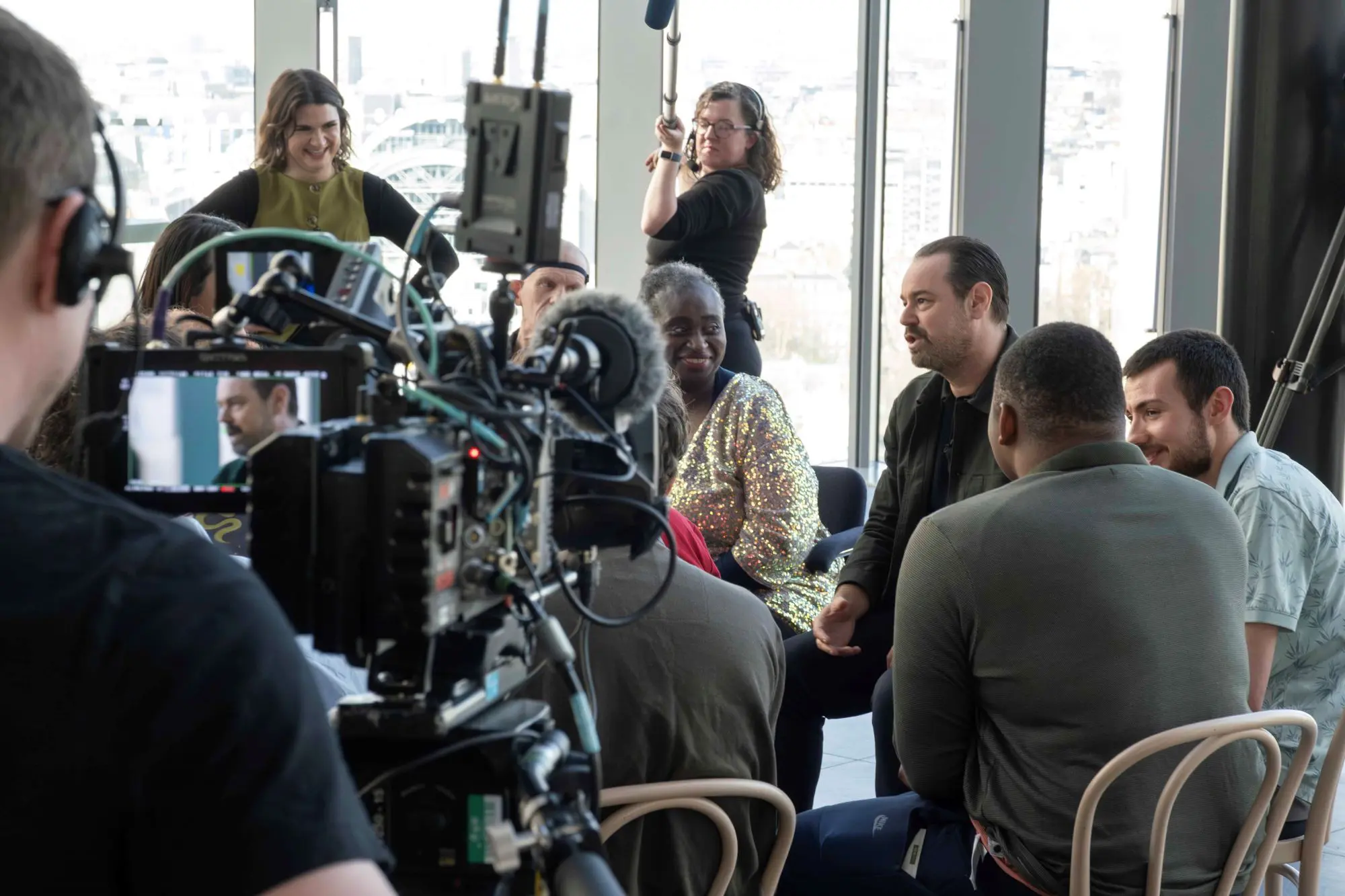
Speaking at an exclusive panel event at BAFTA 195 Piccadilly just before the awards winners were announced in February the filmmaker reflected on the film and the process that went into making it, as well as sharing his advice for others. Here we share some of what he had to say…

Choosing a debut film

Davies Jr says one thing he was clear on from the start was that when the chance “to make a feature properly” arose he wasn’t going take the opportunity for granted.

Reflecting on the experience, he said: “I was like I’m going to use this as an opportunity to do something that feels quite cathartic and my brother had written a short script about a dream. We lost our father when we were really young so he’d written a script about what it would be like to spend the day with him. I read it and just completely broke down in the same manner my brother had broken down trying to write it so I was like ok let’s try and develop this, worst case scenario we’ll work through some of our daddy issues you know – and it could be something for the rest of our family.”

The film, though deeply personal to the brothers, has resonated widely with its themes of grief and belonging striking a chord with viewers too. And as Davies Jr commented: “I think everybody comes at it from a different [place]… Yes, it’s really personal but I like when people project their life into it because it becomes more of a collective thing where it’s less about me. It’s less about us and [more] how we respond to grief and how we talk about or not talk about it especially in African or migrant communities.”

Giving yourself to a project

Something Davies Jr highlights, as a filmmaker whose work is so close to his heart, is that it can bring up unresolved emotions. So, finding ways to give a degree of separation can be important.

Davies Jr said: “We say our film is semi-autobiographical, because there’s a lot of our life put into the film but in an artistic way. We know the bits that are real and not real and a lot of the stuff that sits with people is the real stuff actually. I think in the moment you are kind of terrified, why am I doing this? Am I going to embarrass my family? But I think after a while…the more you get into the business of making film the more distance you can take from it. But then obviously you shoot the ending scene… and it just throws you back in your emotions.”

He also added: “I would say the edit is the toughest bit of filmmaking in general, period… because I realised I was still grieving and there was a lot I was holding on to. But I think ultimately there’s a degree of separation, and thankfully so, because you have a lot of collaborators and you’re not just having to do the thing by yourself. Everyone pours in their own ideas and the fact that everybody else pours in means it becomes a collective body of work.”

Representation and audience awareness

When thinking about audiences Davies Jr stresses the importance of representation. As someone who is “a child of two countries” the director reflects on how he did not see himself represented on screen as a child and now wants to create films which would have made his younger self feel seen.

Davies Jr shared: “My thing is my audience, because growing up I didn’t see representations of blackness on screen I could identify with a lot of the time. And I think when you’re a child, certainly an emotional child, that has a lot of effect on your mental health so actually I think I’ve known since quite early on who I make films for.

“I make films for my younger self just to be able to be seen and to be acknowledged because I don’t fit into these kind of like aggressive or stereotypical portrayals of blackness and violence and then I don’t necessarily fit into this hyper successful idea of what that means, and I think there are so many people in the middle. Equally I’m a child of two countries… I’m Nigerian and I’m British so I straddle both those worlds. [Yet] I’m not Nigerian enough for Nigerians and I’m not British enough for Britons so it’s like what the hell am I you know. And there’s just a lot of that, and there’s a lot of us… so I think that’s the audience.”

Advice for others

  • Advocate for yourself as a director “I was cognisant before when I was doing commercial stuff that I spoke to as many directors as I could and shadowed to try to understand more.”
  • Develop relationships early – “[Think] young critics, people who have blogs, stuff like that because ultimately those are the people that write about the film… I always talk about working horizontally, working with people on your level who are also trying to come up because those are the people that talk about your film.”
  • It’s not all or nothing on the first film – “You’re not going to make any money on your first film. But if you can show that you’re collaborative, you can promo a film, and feedback on development, you can pitch and talk about your film, then it gets you to the next film where you potentially can make a little bit and then that gets you to the next.”

What is BAFTA Breakthrough UK?

At BAFTA we are committed to supporting creative Film, Games and TV talent and one way we do this is through our Learning, Inclusion and Talent programmes. Akinola Davies Jr is a member of BAFTA’s 2025 Breakthrough cohort – our flagship programme showcasing and helping accelerate the careers of the next generation, and part of our charity’s vision that people from all backgrounds will have opportunities to thrive in the screen industries. Entries for the 2026 BAFTA Breakthrough programme are open until 19 June so get your applications in now.