Dame Donna Langley: The Fellowship 2026

Posted: 22 Feb 2026

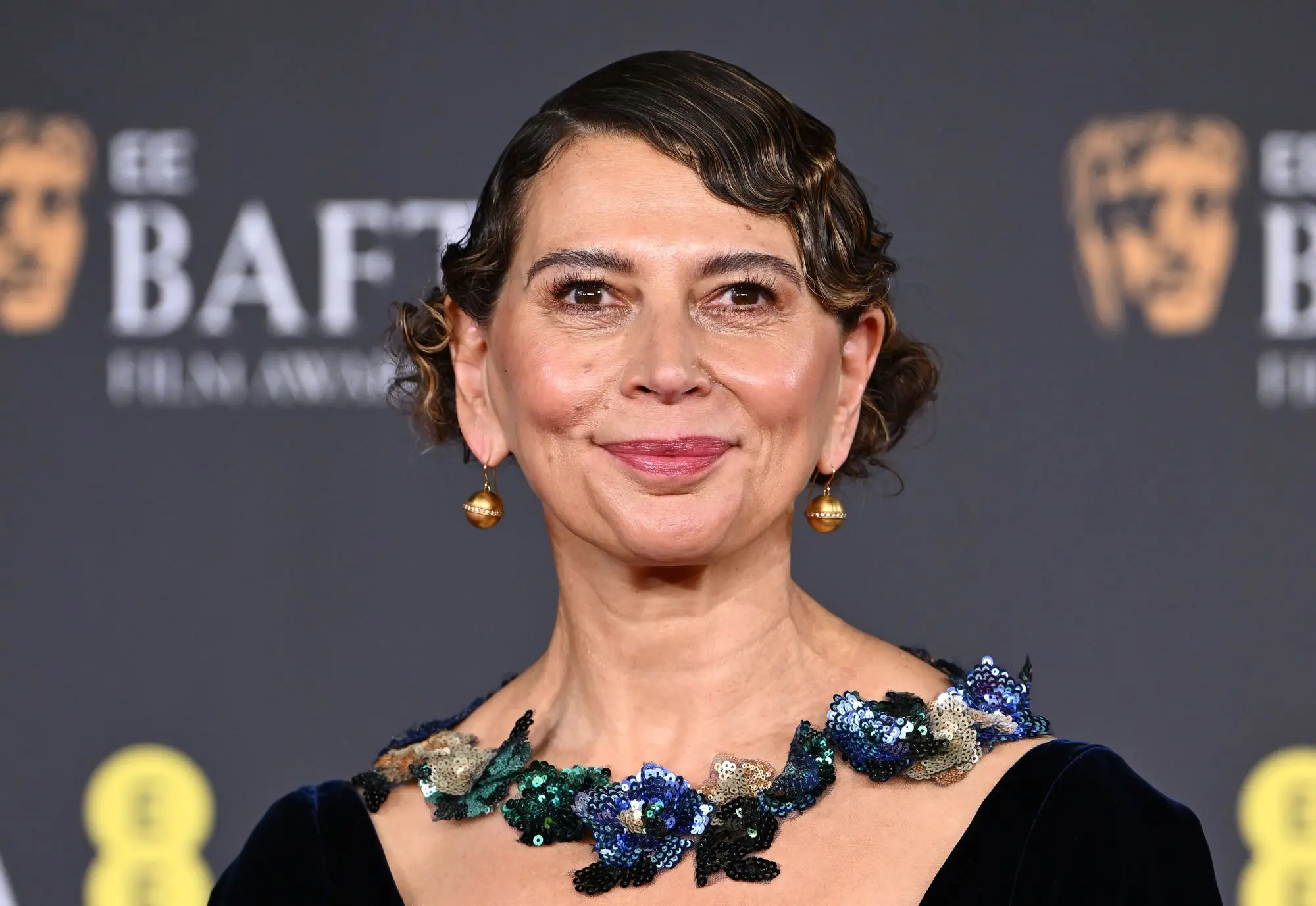
In terms of firsts, Dame Donna Langley has a pretty major one under her belt: not only one of the most influential executive leaders in modern-day Hollywood, as chairman of NBCUniversal Entertainment, she is the first British woman ever to run a major American film studio.

Now, BAFTA recognises her four-decade career with its highest accolade, the BAFTA Fellowship. An honour whose previous recipients have included industry legends like Warwick Davis, Ang Lee, Thelma Schoonmaker, Sir Ridley Scott and Dame Judi Dench.

From Isle of Wight to LA

Such company, and such a milestone as the Fellowship, feels a long way away from Langley’s childhood home on the Isle of Wight. But, having moved to LA in her early 20s to pursue her love of film, since the 1990s she has called Universal home. A home where she has risen from early marketing and distribution roles up to creative leadership positions. But while the facts of her CV are certainly impressive, Langley’s creative intuition is more unique than those mere markers suggest. It’s the executive’s twofold ability to both nurture auteur filmmaking, and steer billion-dollar franchises, that is her key strength. And behind the big screen moments, she has remained a passionate advocate for mentorship as a route for opportunity – something vital for groundbreaking filmmaking to keep prevailing.

One need only look at Langley’s back catalogue of late to see that the film executive has got serious range – and possesses a sixth sense for a smash hit. Instant classics like Get Out (2017) and Oppenheimer (2023), as well as major franchises like Wicked, Despicable Me/Minions and Jurassic World, have all come through NBCUniversal in the last decade alone. But as Langley revealed ahead of tonight’s Awards, she didn’t get here without some guidance along the way.

Here she talks to us about her journey…

BWhat was one of your earliest memories of experiencing cinema? And what are the feelings that memory conjures up?

DLMy family and I were more into books than movies, and that is where my love of storytelling first came from. However, my parents did take me to see Fantasia (1940) when I was very young. I remember the visuals and score to this day, and the feelings they evoked… mostly of terror!

Once I was older, a close friend and I would take the train to London or travel to Paris, and we saw wonderful films like Diva (1981) and Le Grand Bleu (1988). Those experiences indelibly shaped my love of cinema forever.

BWhat were some early turning points for you as you began your career in film? Was there an individual or entity that you feel really supported you at that time?

DLI owe a lot of my early experiences in this business to some incredible mentors, some of whom I still call friends and peers to this day. I certainly heard some no’s along the way and had my fair share of people tell me all the reasons why I wouldn’t make it in LA. But I was fortunate to come across people who saw my potential – long before I knew I had any – and genuinely wanted to help.

Much of my career has been at NBCUniversal, and I am forever grateful for that opportunity. But I’ve gained so much from being a part of the wider filmmaking community, and all the amazing people I have had the chance to work with along the way. I also have to give a nod to my alma mater, New Line Cinema, where I learned many of the fundamentals from the executive perspective with early experiences on films like Austin Powers (1997) and more.

BHow have you interacted with BAFTA throughout your career?

DLBAFTA has always been the gold standard of excellence in the UK for film and TV. The organisation recognises the best in their field and celebrates iconic moments in media that stand the test of time. And Universal has been privileged to collaborate with BAFTA on its UK headquarters, an investment not only in a space, but in the future of the creative community it serves.

As a studio executive, I’ve been fortunate to engage with BAFTA not only through our films and TV programmes, but also through meaningful connections with extraordinary emerging creators – particularly British ones – who are actively shaping the future of global entertainment.

BWhat does running a modern-day studio actually mean in 2026?

DLThere is no user manual, and you must be able to adapt quickly to changing conditions. This business is incredibly cyclical and complex, and we’ve seen a lot of disruption over the past few years. With further consolidation on the horizon, it’s important to maintain focus in order to stay on mission.

Our leadership has always persevered in the face of challenges by adapting with ingenuity, taking calculated risks, and continuously evolving our own business to future proof it. As an industry, we can’t allow the next chapter to be written for us – we must do that for ourselves, and I am confident we will do just that.

BBeyond box office draw, what does ‘success’ feel or look like to you in your role? What other elements make the results of a certain project feel especially fulfilling or triumphant?

DLThe metrics of “success” have changed remarkably for film projects because we’re far past the days of box office and physical home entertainment being the only part of the puzzle. We have licensing agreements and partnerships in ancillary markets that allow us to meet the consumer at different points in a film’s life-cycle. Yes, we aim to make a return on our investment and a big splash theatrically, but sometimes success looks like resonance: it’s when a project taps into the zeitgeist and becomes a larger part of the cultural conversation.

I’m most proud of the films and TV series that travelled beyond their initial release, sparking dialogue, debate, or connection across different audiences and platforms. A fulfilling project is one that lingers: when people quote it, argue about it, see themselves in it, are moved to laughter or tears by it. When they feel seen because of it.

BLooking back, what are some achievements you feel especially proud of?

DLI take great pride in the projects I championed at times when they may not have felt like an obvious choice – whether it was the first globally recognised, all-female led R-rated comedy (Bridesmaids, 2011), a biographical drama about an influential hip-hop group beating the odds (Straight Outta Compton, 2015), or an adaptation of a stage musical resulting in one of the UK’s most successful box office hits (Mamma Mia!, 2008). Being in a position to champion projects that help bring universal experiences, cultures and stories to the big screen is a privilege.

To do one of the greatest jobs in the world with some of the greatest creators of all time? You can’t place a value on that. I share every piece of success with our unparalleled creative partners who are defining the next 100 years of cinema and bringing great entertainment to audiences around the world.

BFinally: what do you hope the next generation doesn’t have to fight as hard to prove?

DLI hope more doors continue to open for creatives coming up the ranks, but the threshold to get a film or TV show made is a high bar and that is an important challenge to recognise. While new technology and innovation may democratise the making of “content” to a degree, the fight will always be there for art in its truest form. In many ways, the struggle is what makes it great!