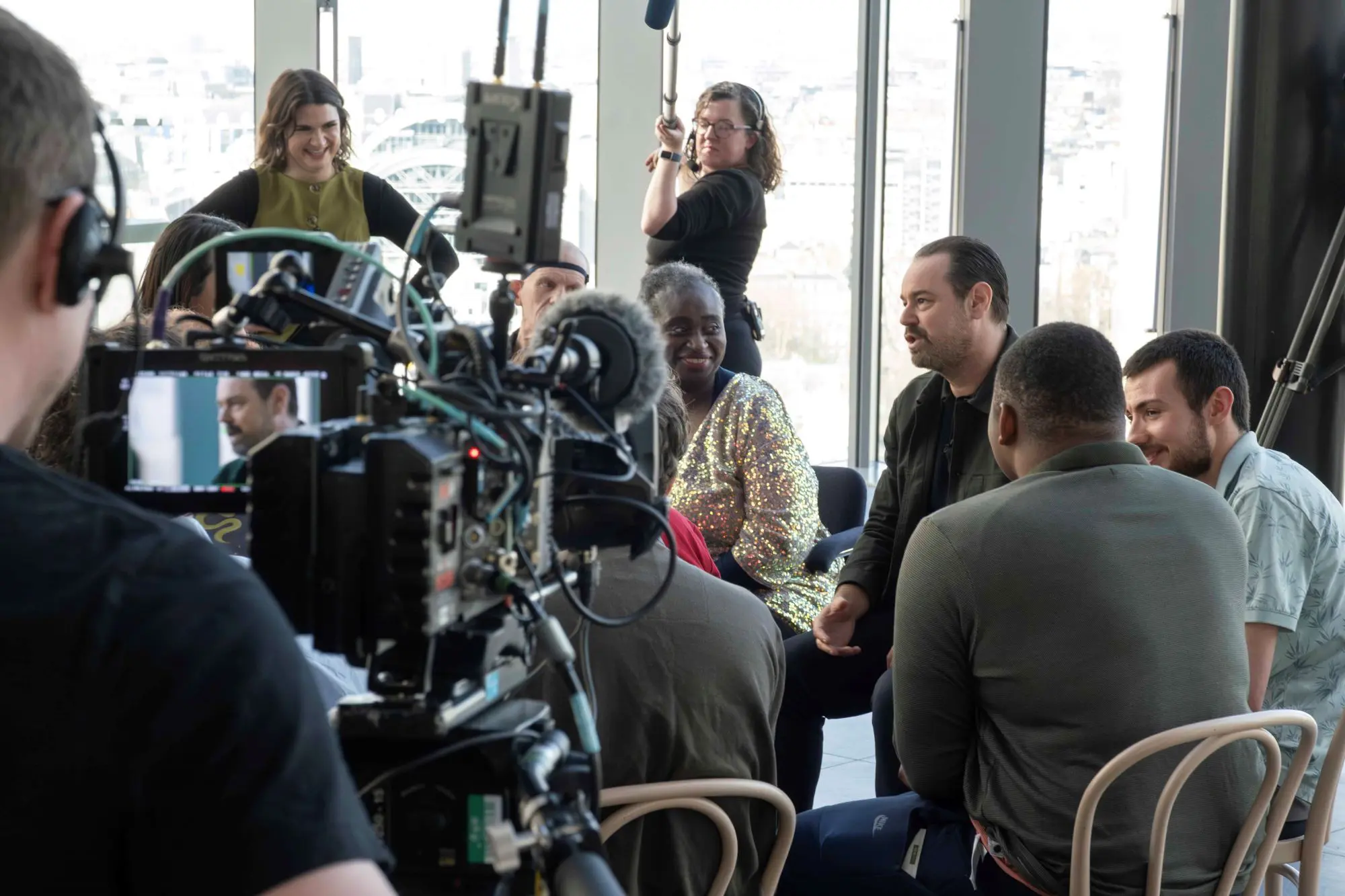
A major decision for a cinematographer is which camera to capture the action with. Sandgren used a range of camera types to suit the different environments in the film: “It’s a process in pre-production, of how you figure these thing out and why you do what you do. We ended up shooting basically the beginning of the film, when we’re emotionally connected more intimately in 16[mm], then we travelled into 35mm in the Houston sequence, but we maintained the graininess at NASA and the contrast but at home it was a softer look.”
He shared how he filmed the scenes at home: “In the domestic scenes, it was more the handheld and intimacy with [the actors], we thought about it as then they’re emotionally open, we could be closer to them.”
Sandgren contrasted the raw and authentic film captured in the domestic scenes by shooting with IMAX for the moon scenes which are “much cleaner and crisper.” It was his first time shooting with IMAX, which came with challenges such as: “you roll a thousand foot mag that normally in a 35 camera would be ten minutes, that would be 3 minutes in an IMAX camera so it’s very short amount of footage to shoot on, and they’re quite noisy so it’s tricky to shoot with sound.”
Why are these camera choices so important? For Lindgren, these decisions aren’t necessarily technical, but instead are about creating atmosphere and emotion. He said: “To me, cinematography is an emotional tool for the storytelling, it’s like the music. You have what’s going on, but then how you view it is emotional… if I have the wrong camera, this may not respond to everybody even, or be technically correct or anything, but if I don’t [make] decisions for the emotion… say if we’d have shot the domestic scenes in the beginning in IMAX, for me that would have felt very weird emotionally in this film.”